Bhimashankar Temple
भीमाशंकर मंदिर
- Deity
- Shiva
- Location
- Bhimashankar, Pune district, Maharashtra
- Coordinates
- 19.07° N, 73.54° E
- Open
- All year
Significance
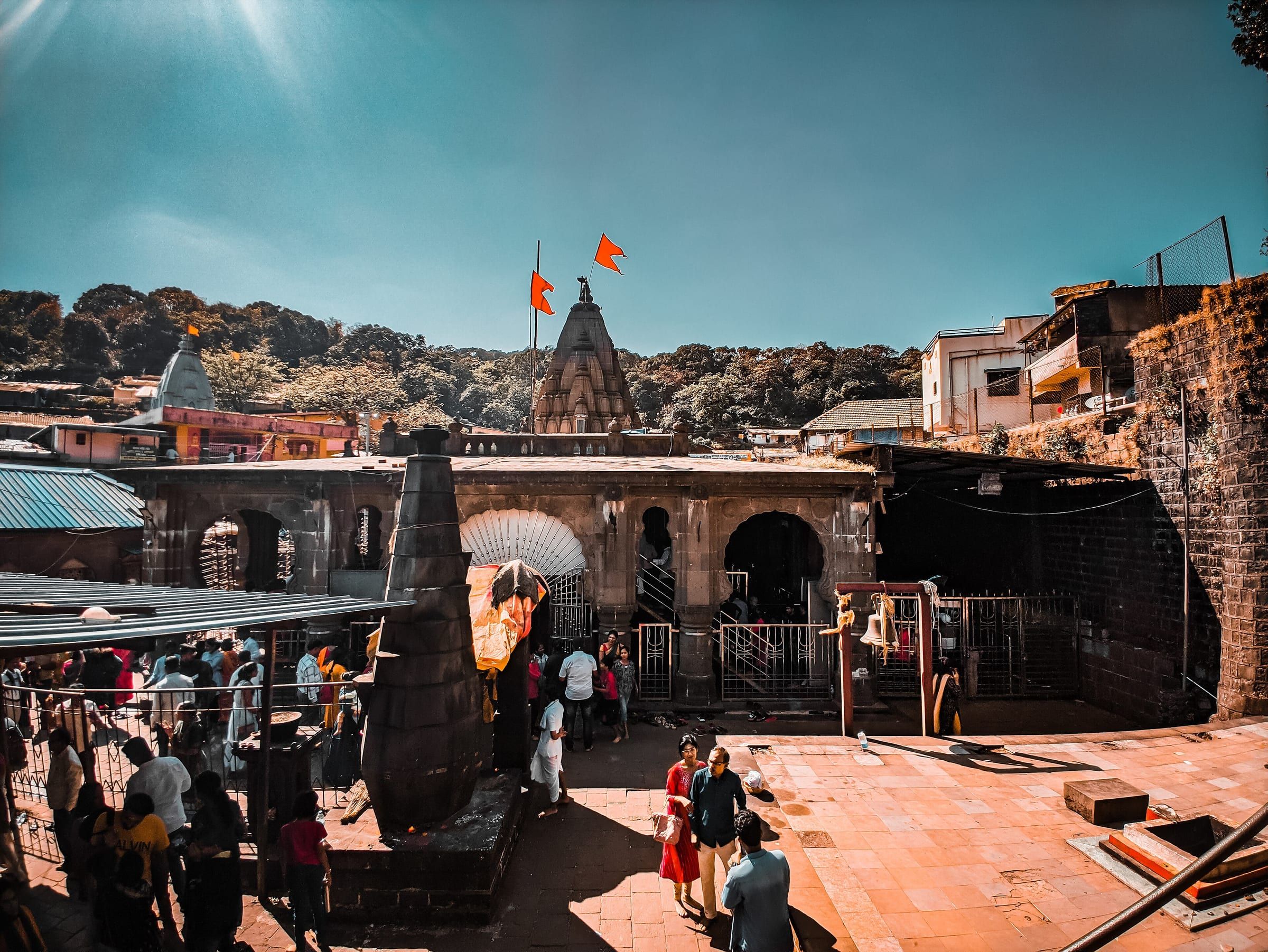
Bhimashankar is one of the twelve Jyotirlingas and one of the three in Maharashtra. It stands high in the Sahyadri hills, in the Bhimashankar forest range, where the Bhima river rises. Some traditions identify other sites as this Jyotirlinga, including one near Guwahati in Assam.
History and legend
Legend holds that Shiva took the form of Bhima Shankara here at the request of the gods, and that the sweat from his body after battle formed the Bhimarathi, or Bhima, river.
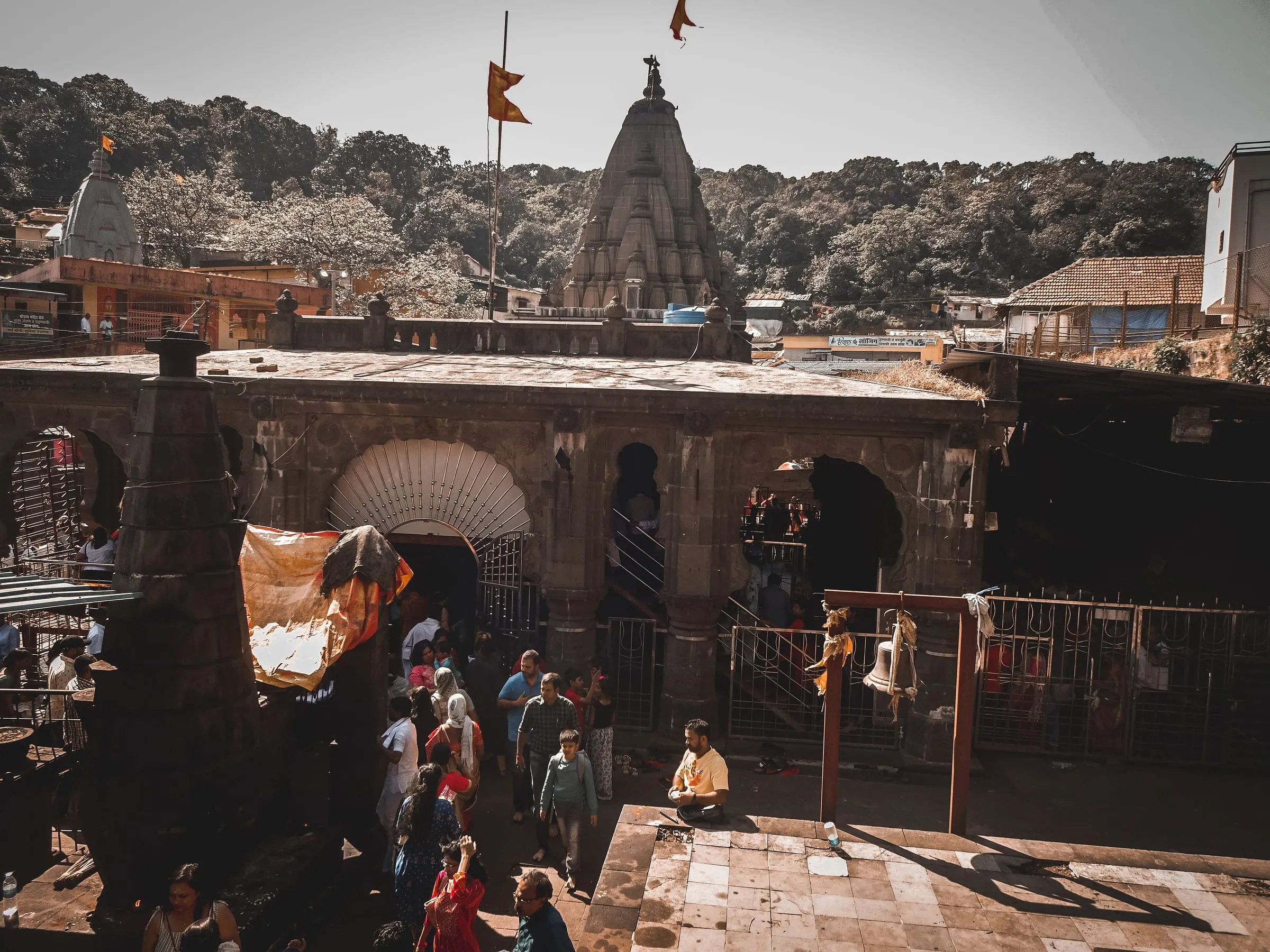
The black-stone temple dates back to the 13th century. Its hall and spire were improved in the 18th century by Nana Phadnavis, and Chhatrapati Shivaji endowed the temple to support its worship.
Before you go
- The surrounding forest is a wildlife sanctuary, home to the Indian giant squirrel.
- The monsoon is lush but very wet, and the ghat roads can be slippery; October to February is easier.
- Carry a light jacket in winter; the hills are cooler than Pune.
Photos
Visiting
- Open
- All year.
- Best time to visit
- October to February
- Darshan timings
- Check with the temple before you travel.
- Festivals
- Maha Shivaratri (February or March)
- Mondays of Shravan (July to August)
Where to stay
Pilgrims usually stay in Bhimashankar and Ghodegaon. There is little to stay in at Bhimashankar: local priests arrange simple lodging, and there are dharamshalas near the village. Shinoli and Ghodegaon, on the road from Pune, have more choice.
MTDC BhimashankarGovernment rest house
Bhimashankar
Maharashtra Tourism resort, with rooms and dormitories.
Sources
Found something out of date? Report a correction